

We normally ingest small amounts of humic and fulvic acid through our food and water. However, the natural presence of these substances in our food is declining due to the use of artificial fertilizers, pesticides, and intensive agriculture. Even modern water treatment processes almost completely remove humic acids because they can slightly color the water, while drinking water standards require clear and colorless water.
Humic and fulvic acid: the powerful base of all our products
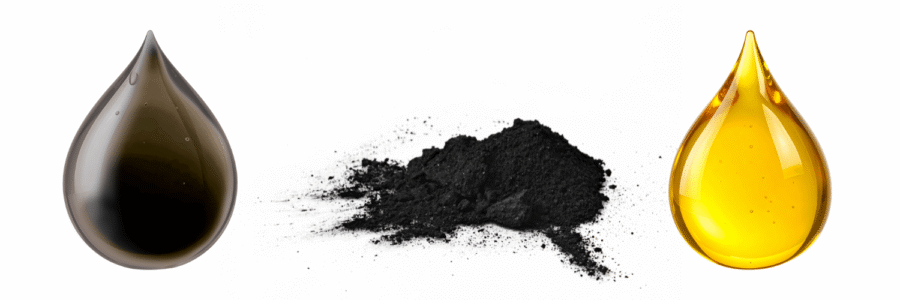
The quality of humic acid improves with age: the older, the better. High-quality humic acid is black, indicating strong elemental binding.
Fulvic acid, on the other hand, is clear and golden yellow and occurs in a free, unbound form through fermentation.
International Humic Substances Society
Not all humic and fulvic acid products are the same, and that causes confusion. How do you know how much humic or fulvic acid a product actually contains? The percentages, especially for fulvic acid, can vary considerably.
Clear, standardized laboratory tests are therefore essential. In the past, various methods were used to analyze humic products, leading to unclear and sometimes incomparable claims.
The International Humic Substances Society (IHSS) verifies humic and fulvic acid levels based on scientifically standardized procedures.
We choose clarity. That’s why our products are tested and certified according to the IHSS method.
We at Humic Solution are proud of this.

Much more to say about these organic substances

Because we have so much more to tell you about humic and fulvic acid, we would like to refer you to this informative knowledge platform.
